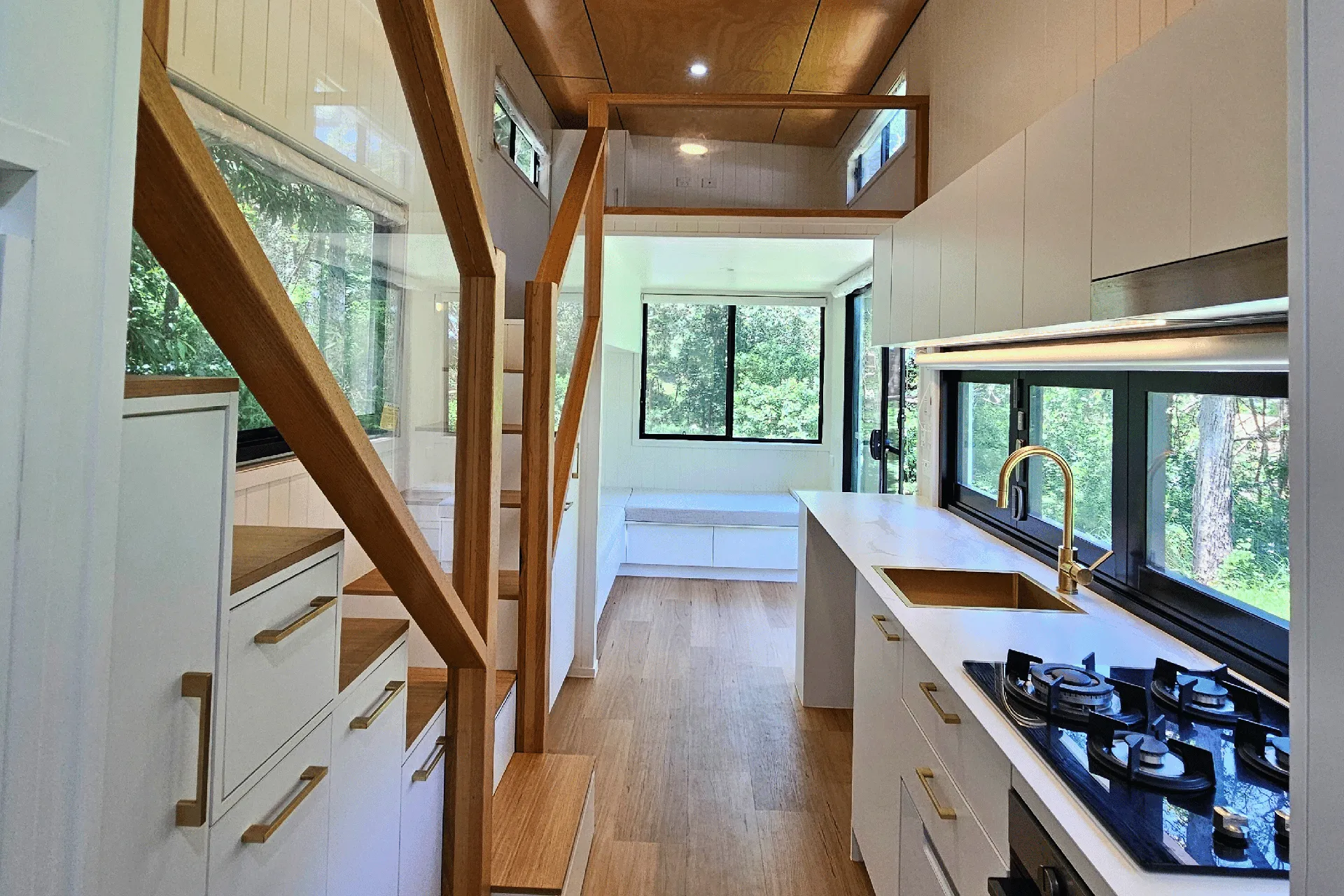
Tiny homes are one of the smartest lifestyle decisions you can make. Lower cost of entry, freedom from a massive mortgage, flexibility to move or stay—it's a genuinely exciting way to live.
But here's something worth knowing upfront: tiny homes depreciate. Like cars, caravans, and boats, they lose value over time. That's not a reason to avoid buying one—it's just a reason to be smart about it.
After specialising in reselling tiny homes through Tiny House Agency, I've seen clear patterns. The sellers who protect their value aren't doing anything complicated. They're just doing a few simple things consistently—starting before they even move in.
If you're buying through a buyer's advocate like THA, we help you think about this from day one—so you're set up for a strong resale position before the build is even finished.
Here are the six things that matter most.
1. Design Choices: Go Bold, But Know the Trade-Off
Your tiny home should be exactly what you want. That's the whole point—it's your dream, your lifestyle, your rules.
But here's something worth knowing upfront: the further down the rabbit hole you go with customisation, the more polarising your home becomes at resale.
That custom $10,000 skylight? Beautiful. Life-changing for your morning coffee. But most buyers won't value it at $10,000. They might see it as a nice bonus—or they might worry about future leaks.
Bold colours. Unusual layouts. Niche features that suit your lifestyle perfectly. These aren't bad choices—they're just choices with resale consequences. A bright orange feature wall might bring you joy every day, but half your potential buyers are mentally calculating repaint costs before they've finished the walkthrough.
This isn't about playing it safe. It's about going in with your eyes open.
If you want that skylight, get the skylight. If you love bold colour, go for it. Just understand that personal value and market value aren't the same thing—and the more unique your home, the smaller (but potentially more passionate) your buyer pool becomes.
2. Full Documentation Package
Think of this as your tiny home's logbook.
Build contract. Drawings. Specs. Materials list. Compliance certificates for gas, electrical, engineering. Appliance manuals. Receipts.
The more paperwork you have, the higher the buyer confidence. It's that simple.
But here's what most people miss: the documentation needs to be correct and current.
This happens more often than you'd think—I recently had a listing where the builder changed the floor plan layout during the build. Pretty common; clients make tweaks as they go. But the original plans were never updated. So now the seller has documentation that doesn't match the actual home.
Five minutes of admin back then would have saved a headache now. The builder would have happily updated those plans at the time.
None of this is difficult. You don't need to be a builder. It's just about staying organised and asking the right questions during your build.
Not sure what documentation you should have? This is our specialty—helping sellers get their paperwork sale-ready is a core part of what we do at THA.
3. Maintenance & Service Receipts
Buyers want proof the home was cared for.
Gas system checks. Solar servicing. Trailer brake servicing. Any repairs—with receipts.
It doesn't need to be elaborate. A folder (physical or digital) with dates and receipts is enough. But having nothing? That's a price drop waiting to happen.
Think about buying a used car with no service history. You'd either walk away or lowball the offer. Tiny home buyers think the same way.
Simple habit: every time you service or fix something, keep the receipt. That's it.
4. No Water Damage
Water damage tanks resale value fast.
Water stains. Soft timber. Musty smell. Bubbling laminate. Any sign of moisture ingress and buyers get nervous—or they slash their offer significantly.
The good news? Prevention is straightforward. Check your seals annually. Inspect cladding joints and flashing. Address any gaps before they become leaks. Most tiny home owners can do a visual check themselves in under an hour. A leak-free tiny home slows depreciation like nothing else.
5. Trailer Health
The trailer is the foundation of your tiny home. Neglect it, and you're not going anywhere—literally.
Buyers look at:
Tyre condition and age
Brake servicing
Chassis rust
VIN plate clarity
Current registration
Keep your tyres in good condition (they degrade even when stationary). Service your brakes. Check for rust, especially near the coast. Keep registration current.
If you're building new, trailer quality matters from day one. THA works with trusted suppliers who understand tiny home-specific requirements—proper weight distribution, appropriate braking systems, and long-term durability. It's one of the things we help buyers get right upfront.
6. Minimal Relocations
It's the same logic as low kilometres on a car. Tiny homes aren't designed to be moved constantly. Every relocation puts stress on joints, seals, cladding, suspension, windows, and plumbing connections. A home that's been stationary—or moved once or twice—holds up better than one that's been relocated ten times.
If your tiny home has lived a quiet life in one spot, that's a selling point. Buyers love homes with a low-stress history.
The Bottom Line
The value of your tiny home is largely in your control. Make design choices with your eyes open. Keep your paperwork complete and current. Document your maintenance. Protect against water. Look after your trailer. And don't move it more than you need to.
These aren't hard tasks. They're simple habits that make a real difference when it's time to sell.
A well-maintained tiny home with good documentation sells faster and stronger. When you buy or build smart now, you give yourself options later. That's the whole point of tiny living—freedom and flexibility on your terms.
Buying a tiny home? Let us help you protect your investment from day one—design guidance, builder vetting, and documentation support included. Learn about our buyer's agency
Ready to sell your tiny home? We specialise in getting tiny homes sale-ready and in front of qualified buyers. See how we can help you sell