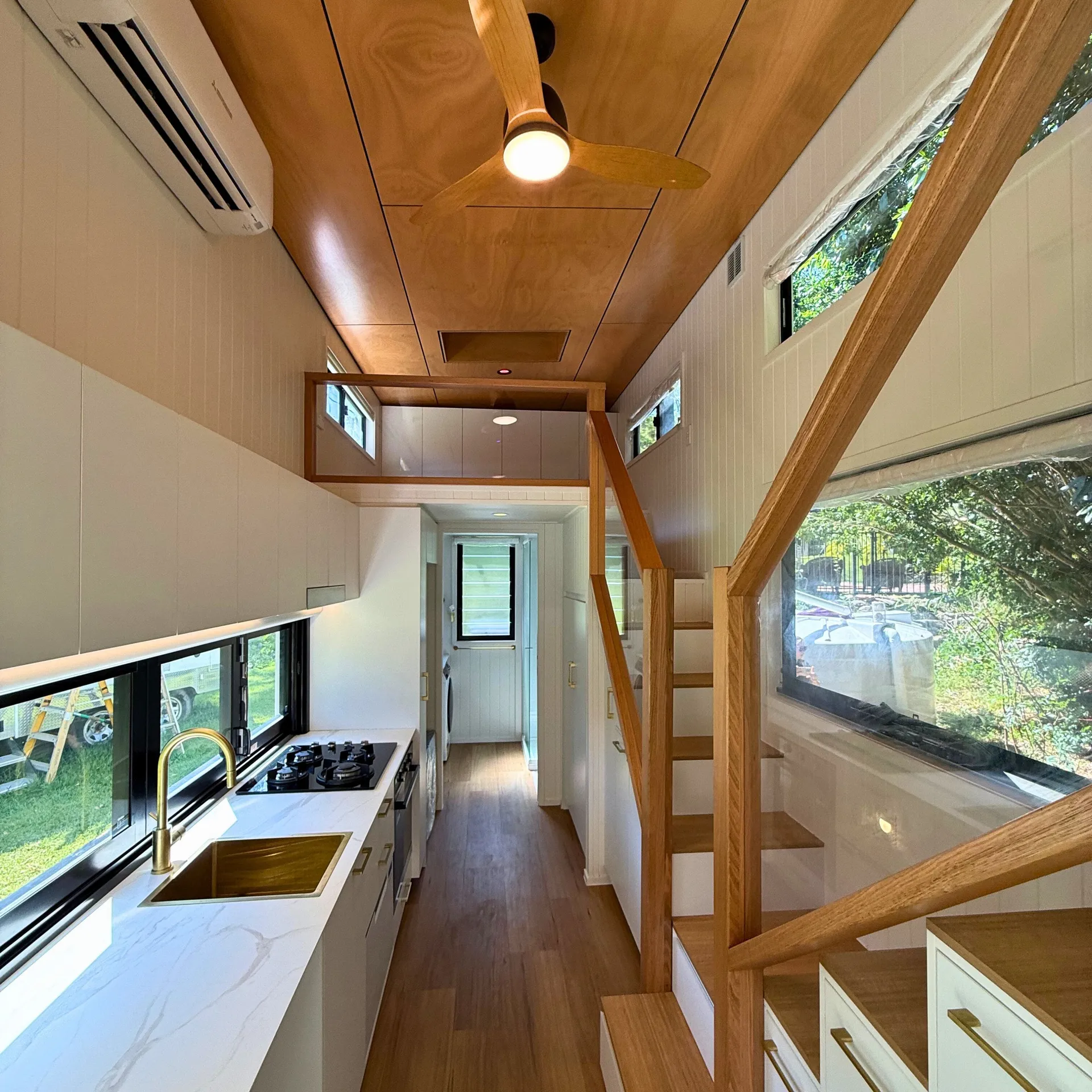
Buying a second-hand tiny home can be one of the smartest property decisions you make. You skip the 6-12 month build wait, avoid the risk of builder delays or collapses, and often get a move-in ready home for less than new-build cost.
But the second-hand market is also where things go wrong. Unlike traditional real estate, there's no standard process, no mandatory inspections, and no regulation protecting buyers. Most transactions happen through Facebook groups between strangers, and not everyone selling is honest.
At Tiny House Agency, we assess every second-hand tiny home before it's listed on our marketplace — and we reject the ones that don't meet our standards. This guide shares the exact checklist we use, so you can apply the same scrutiny whether you're buying privately or through us.
Why Second-Hand Makes Sense
Before we get into the risks, let's be clear — there are genuine advantages to buying pre-owned:
Immediate availability: No 6-12 month build wait
Known quantity: You can see and inspect exactly what you're buying
Lower cost: Typically 10-30% below equivalent new-build pricing
Avoided builder risk: No chance of your builder going bust mid-project
Sustainability: Reusing an existing home is better for the environment
Negotiation room: Private sellers are often more flexible than builders
The key is knowing how to buy safely.
The Reality: Why This Market Is Risky
Most second-hand tiny homes are sold on Facebook Marketplace or in Facebook groups. That means:
No verification that sellers actually own what they're selling
No requirement to disclose issues or history
No professional photography — easy to hide problems
No contracts or standard processes
Buyers and sellers are often in different states
Deposits sent to strangers based on trust
This isn't to scare you off. It's to make sure you go in with eyes open.
Reading the Seller (Before You Even See the Home)
The most important assessment isn't the tiny home — it's the person selling it. Here's what to look for:
Trust Signals (Good Signs)
They can prove ownership: Original purchase invoice from the builder, build contract, or receipt in their name
They're transparent about why they're selling: Lifestyle change, upgrading, relocating — clear and consistent story
They welcome inspection or provide thorough documentation: No pressure to "secure it" with a deposit before you've done your due diligence
They have documentation ready: Build plans, compliance certificates, manuals, warranty info
They can answer questions consistently: Same details every time, no contradictions
They're patient with your due diligence: Genuine sellers understand you need to verify
Warning Signs (Proceed With Caution)
Vague about ownership: "I'm selling for a friend" or can't produce paperwork
Pressure tactics: "Another buyer is coming tomorrow" or "I need a deposit to hold it"
Won't meet in person or provide documentation: Only wants to deal via messages, avoids video calls, no willingness to provide comprehensive information
Insists on deposit before any due diligence: Asking is normal; refusing to allow inspection or provide documentation until you pay is not
Inconsistent story: Details change between conversations
Gets defensive about questions: Legitimate sellers expect due diligence
Cash only, no paper trail: Avoiding documentation for a reason
Walk Away Immediately If:
They insist on payment before allowing any form of verification — no inspection, no documentation, no video walkthrough
They can't prove they own it
They refuse to provide documentation and won't contact the builder to obtain it
The price seems too good to be true — it probably is
They won't let you test systems or answer reasonable questions
Your gut says something's off
Trust your instincts. If a deal feels wrong, it probably is.
Documentation — What to Ask For
A home is only as trustworthy as its paperwork. Here's what legitimate sellers should be able to provide:
Essential Documents
Proof of ownership: Original purchase invoice or contract from builder
Builder details: Who built it, when, contact details (if still operating)
Trailer information: VIN number (visible on the chassis) and original receipt proving manufacturer and year built
Electrical certificate of compliance: Required for any hardwired electrical work
Gas compliance certificate: Legal requirement for gas installations
Valuable If Available
Original build plans or specifications: Shows what was promised vs delivered
Plumbing certificate: Some councils require this
Warranty documents: May transfer to new owner
Appliance manuals: Especially for solar, batteries, and composting toilets
Maintenance records: Shows how well it's been cared for
What If Documentation Is Missing?
No paperwork doesn't automatically mean scam — some genuine sellers simply didn't think to keep records when they bought, or have misplaced them over time.
If documentation is missing:
Ask them to contact the original builder: Reputable builders keep records and can often provide copies of invoices, specifications, or compliance certificates
Be patient but persistent: If the seller is genuine, they should be willing to make the effort
Factor it into your decision: Less documentation means more risk — price accordingly
Think about your future sale: You'll want this documentation when you resell, so it's worth obtaining now
The less documentation available, the more important a professional inspection becomes.
Understanding the Home's History
How a tiny home was used tells you more than how it looks. Always ask:
Use Questions
What was it used for? Full-time living wears differently than weekend getaways or Airbnb
How long did they own/live in it? Very short ownership raises questions — why are they selling so quickly?
Where has it been located? Coastal = salt corrosion risk. Humid climate = mould risk. Under trees = moisture and debris issues
Has it been moved much? Frequent towing stresses the chassis and structure
Has it been stationary for years? Could have settling issues, tyre flat spots, and hidden moisture damage
Lifestyle Questions
Any pets? Odours and damage can be hard to fully resolve
Any smokers? Smoke permeates everything and is extremely difficult to remove
Any known issues or quirks? Honest sellers will tell you the things that aren't perfect
Previous Location Matters
A tiny home that spent 3 years by the beach has different wear than one in a dry inland climate. Ask specifically:
Was it in a humid or coastal environment?
Was it under tree cover? (Roof debris, moisture, mould risk)
Was it on a level, stable surface?
Was it connected to services or fully off-grid?
Builder Reputation
Not all tiny homes are built equal. The builder matters enormously.
Questions to Ask
Who built it? Get the actual business name, not just "a guy in Queensland"
Is the builder still in business? If they've gone bust, warranty is worthless
Can you contact the builder? Genuine sellers won't object to verification
Was it a professional build or DIY? Owner-built homes often lack compliance certificates
Why This Matters
Reputable builders = quality materials, proper engineering, compliance certificates
Unknown builders = no accountability, can't verify claims
DIY builds = often no electrical or gas compliance, insurance issues, resale problems
We know the Australian tiny home building industry. We know who builds quality, who cuts corners, and who's gone bust leaving owners stranded. This knowledge protects our buyers from inheriting someone else's problem.
For more on this topic, see our guide on choosing a reputable tiny house builder.
Professional Inspections
Here's something most guides don't tell you: you don't have to assess everything yourself.
If the tiny home is more than a year old, consider hiring a building inspector or specialist to assess both the trailer and the structure. You wouldn't skip a building inspection on a traditional house — don't skip it here either.
A professional can identify:
Structural issues you might miss
Chassis condition and any concerns
Electrical or plumbing problems
Water damage hidden behind walls
Whether the home matches its documentation
The cost of an inspection is nothing compared to inheriting hidden problems. It also gives you negotiating power if issues are found.
Don't be afraid to get professional help. It's not a sign of distrust — it's smart buying.
Physical Inspection Basics
Whether you inspect yourself or hire someone, here's what to look for:
Chassis & Trailer
Overall condition — any obvious damage or repairs
VIN number visible and legible on the chassis
Weight plate visible — is it under 4.5 tonnes for road-legal towing?
Tyres, brakes, lights, coupling all functional
Exterior
Cladding condition — cracks, warping, damage
Roof sealed properly — any signs of leaks or repairs?
Windows and doors seal correctly — gaps mean drafts and water ingress
Any signs of water staining or damage
Interior
Water damage signs: Stains on ceiling or walls, soft spots in flooring, bubbling paint, musty smell
Mould: Check corners, under sinks, inside cupboards, around windows
Flooring: Solid throughout — no soft spots or warping
Cabinetry: Doors close properly, no swelling (moisture indicator)
Ventilation: Range hood, bathroom fan, adequate airflow
Systems to Test (Don't Skip This)
Electrical: Turn on every light and power point. Check solar/battery readout if applicable
Plumbing: Run all taps, flush toilet, check for leaks under sinks
Hot water: Actually wait for it to heat — "it works" isn't good enough
Gas: Test cooktop, check for smell, sight the compliance certificate
Appliances: Test everything that's included in the sale
General Inspection Tips
Always inspect in person if possible — photos hide issues, video can be selective
Bring someone knowledgeable if you're not confident in assessing yourself
Take your own photos and video — document condition at time of inspection
Ask to see everything work — every system, every appliance
Inspect in different conditions if possible — a rainy day reveals leaks
Buying Interstate or Sight-Unseen
At Tiny House Agency, we've successfully helped buyers purchase sight-unseen from interstate — not because we encourage skipping inspections, but because our vetting process is thorough enough that buyers trust what they're seeing.
Every sight-unseen sale we've facilitated included:
Comprehensive documentation verified
Detailed walk-through videos
Professional photography
A licensed agent overseeing the transaction
The opportunity for buyers to arrange their own inspection
If you're considering buying without inspecting in person:
Only do this through a trusted source — not a random Facebook listing
Ensure comprehensive documentation — photos, videos, certificates, inspection reports
Get a professional inspection — hire someone local to assess on your behalf
Verify the seller thoroughly — proof of ownership, video calls, consistent communication
Use secure payment methods — with a clear paper trail and receipts
Without this level of due diligence, insisting on a deposit before you've verified anything is a major red flag.
The Transaction
Found a home you want to buy? Here's how to protect yourself:
Deposits
Never pay a deposit before completing your due diligence (inspection, documentation review, or comprehensive remote vetting)
10-20% deposit to hold is standard — but only after you're satisfied with what you're buying
Use bank transfer (creates paper trail) — not cash
Get a receipt for any deposit paid
Payment
Final payment via bank cheque or verified bank transfer
Never hand over full payment until you have keys and all documentation
Get a proper receipt/invoice for the sale
Handover
Walk through all systems with the seller — power, water, gas, toilet, and hot water
Get all keys, remotes, and special tools
Collect all documentation — compliance certificates, manuals, original purchase invoice
Take photos of the condition at handover
Get the seller's contact for questions that arise in the first few weeks
The Tiny House Agency Checklist
Seller Verification ☐ Can prove ownership (original invoice/receipt in their name) ☐ Willing to allow inspection or provide comprehensive documentation ☐ No insistence on deposits before due diligence ☐ Consistent, transparent answers ☐ Clear reason for selling
Documentation ☐ Original build contract/invoice (or seller willing to obtain from builder) ☐ VIN number visible on chassis ☐ Original trailer receipt (proves manufacturer and year built) ☐ Electrical compliance certificate ☐ Gas compliance certificate ☐ Builder details (contactable if possible)
History ☐ Use type known (full-time, Airbnb, weekender) ☐ Location history known (coastal, humid, inland) ☐ Movement history known ☐ Any issues disclosed
Professional Inspection (Recommended for 1+ Year Old Homes) ☐ Building inspector or specialist engaged ☐ Trailer and chassis assessed ☐ Structure and systems assessed ☐ Report reviewed and issues noted
Physical Inspection ☐ Exterior — sealed, no damage ☐ Interior — no water damage, mould, or soft spots ☐ All systems tested and working ☐ All inclusions verified
Transaction ☐ Written agreement ☐ Deposit receipt ☐ Verified payment method ☐ All documents handed over
Don't Want to Do This Alone?
This checklist covers our most important criteria — the same standards we apply before accepting any listing on our marketplace. It's a lot to manage on your own, especially if you're buying interstate or navigating this market for the first time.
Here's the good news: our buyer's agency service is free for buyers. We only charge sellers — so you get professional representation, access to vetted listings, and expert guidance at no cost to you.
Your options:
Browse our marketplace — every listing has been through our vetting process, so you can buy with confidence
Explore our buyer's agency service — if you're considering a custom build or want help finding the right home, we'll guide you through the entire process
Either way, bookmark this checklist and refer back to it before making any purchase. And if you'd rather have us handle the due diligence — get in touch. That's what we're here for.