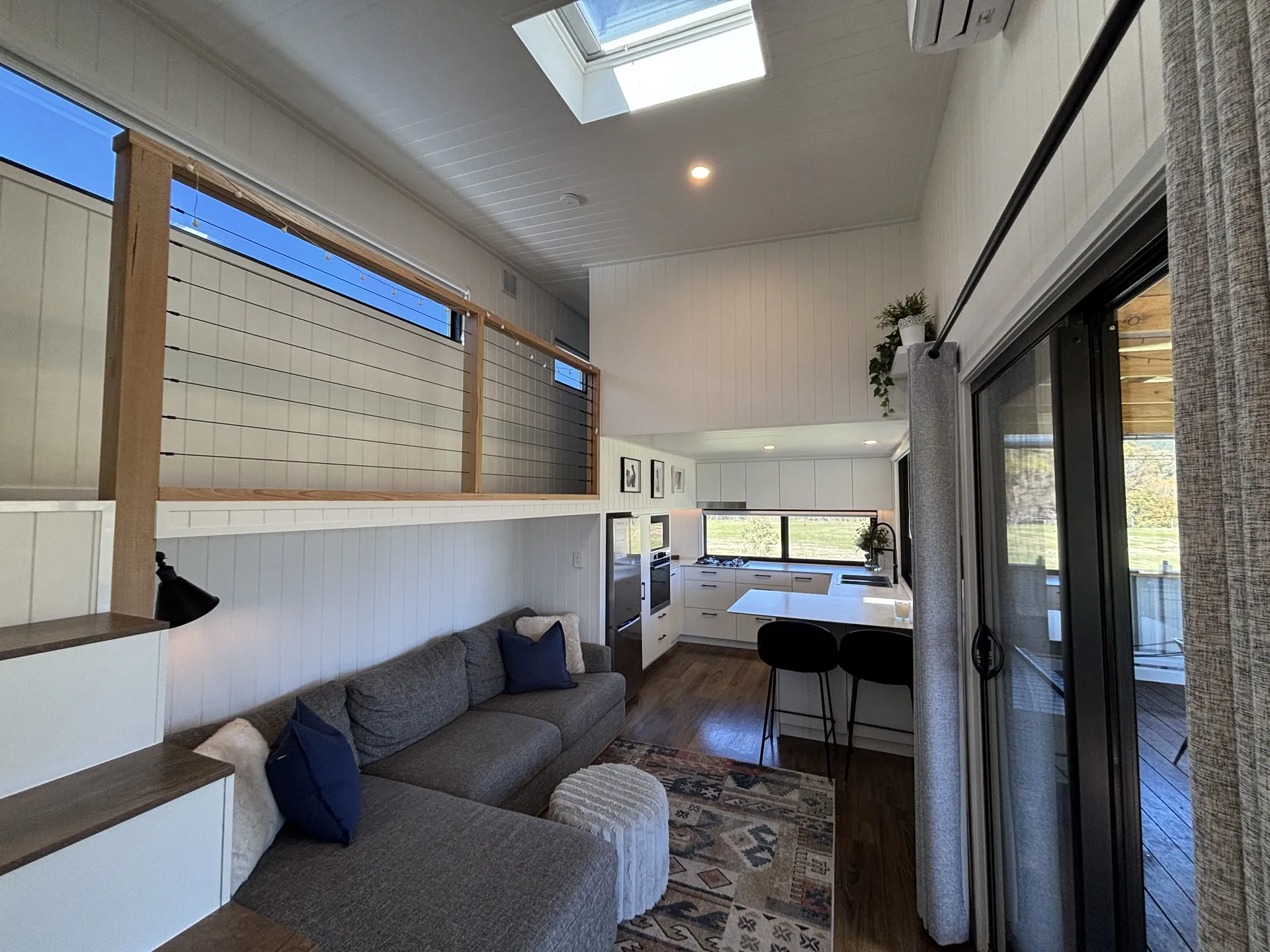
Selling A Tiny Home
Why Selling Your Tiny House Isn’t the Same as Selling a Car, Caravan, or House — And What to Do Instead
16 September 2025
7 min read
Selling A Tiny Home
It happens all the time. Someone decides to sell their tiny house and thinks, “I’ll just post it in the Facebook groups” or “Facebook Marketplace works for everything else, why not this?” Months later, they’re still fielding endless “is this still available?” messages, frustrated that serious buyers seem impossible to find.
Tiny houses sit in a unique category — they’re not vehicles, not caravans, and not traditional homes. They require a sales approach that accounts for their regulatory, financial, and logistical complexity. Treating them like a casual marketplace item is one of the fastest ways to lose time, money, and momentum.
Here’s why selling a tiny house is different, why common methods fall short, and the strategies that actually work.
The Facebook Trap: Why Social Media Doesn’t Deliver
For most sellers, the first instinct is Facebook — posting in tiny house groups or creating a Marketplace listing. It’s free, has mass reach, and works well for furniture or small items. But for high-value properties like tiny homes, the cracks show immediately.
The issues are clear:
• Competing with everything else. Your $150,000 home is shown alongside sofas, bicycles, and second-hand fridges. Buyers are often in a “bargain-hunting” mindset, not ready for a property-level purchase.
• Tire-kickers everywhere. Many inquiries come from people who haven’t thought about parking, regulations, or finance. Sellers spend weeks answering questions that don’t go anywhere.
• No transaction support. Facebook offers no framework for contracts, inspections, or deposits — leaving sellers exposed in what is effectively a property transaction.
• Listings get buried. With constant new posts, serious buyers often don’t even see a listing before it disappears in the feed.
Even Facebook itself is pulling away from higher-value commerce. In 2024, Marketplace seller fees on shipped items doubled to 10% (Meta), highlighting that the platform was never designed for property-level sales.
Why Traditional Real Estate Agents Struggle
If Facebook isn’t the answer, what about a traditional real estate agent? The problem is that most agents are simply not equipped to sell tiny houses.
• No tiny house buyer network. Their databases are full of conventional home buyers, not those actively seeking a movable dwelling.
• Unfamiliar with regulations. Parking permits and mobile dwelling laws are not part of mainstream real estate training. In fact, each Australian state and council has its own rules (WA Government fact sheet).
• Wrong marketing channels. Platforms like realestate.com.au are rarely used by tiny house buyers. Instead, the audience lives in niche networks and specialised communities.
• Pricing confusion. Without comparable sales data, many agents misprice tiny houses — either undervaluing them against caravans or overvaluing them like houses with land.
Even experienced agents find themselves out of their depth.
The Unique Challenges of Selling a Tiny House
To understand why traditional approaches fail, it’s important to see what makes tiny house transactions different.
• Parking before purchase. Unlike a car (park anywhere) or house (land included), tiny house buyers must already have land access or a clear relocation plan. This narrows the buyer pool significantly.
• Regulatory complexity. Councils across Australia differ on whether tiny homes are treated as caravans, relocatable dwellings, or secondary dwellings (ATIA). Buyers need clear guidance.
• Financing limitations. Traditional mortgages don’t apply. Buyers often rely on personal loans, chattel mortgages, or cash (MFAA). Without support, deals fall over.
• Lifestyle education. Many first-time buyers need help understanding utilities, waste systems, ongoing maintenance, and lifestyle adjustments — things that can’t be explained in a quick ad.
• Transport logistics. Relocating a tiny home involves heavy vehicles, pilot cars, and permits for interstate moves. These aren’t standard considerations in real estate or casual sales.
The Specialised Solution: Tiny House Agency
Recognising these challenges, Tiny House Agency was created to bridge the gap between casual DIY selling and traditional property sales. As licensed real estate professionals specialising exclusively in tiny houses, the Agency combines property expertise with niche industry knowledge.
Here’s what sets the service apart:
• Qualified buyer networks. The Agency connects sellers to buyers actively seeking tiny homes — not casual browsers.
• Correct pricing strategy. Valuations are based on build quality, materials, and craftsmanship, not misleading comparisons to caravans or standard homes.
• Lifestyle-driven marketing. Tiny house buyers purchase a lifestyle first, a dwelling second. The Agency’s marketing speaks to these values, not just specs.
• Parking support. Buyers are guided with resources and connections to avoid sales collapsing at the parking hurdle.
• Transaction expertise. From contracts to inspections to delivery logistics, sellers get professional support every step of the way.
Seller Options with Tiny House Agency
Tiny House Agency provides multiple ways for sellers to engage, depending on how much support they want.
• Marketplace Listing (Basic $499). A professional listing on Australia’s only dedicated tiny house marketplace, reaching a targeted buyer audience.
• Featured Listing ($999). Enhanced exposure with premium placement, professional copywriting, and wider reach to serious buyers.
• Full Agency Service ($1,500 retainer deducted from 8% commission). Comprehensive support, including marketing, qualified buyer vetting, contract management, inspections, and delivery coordination.
These options are designed to give sellers flexibility while ensuring the sales process is handled with professionalism and specialist knowledge.
The Bottom Line
Selling a tiny house isn’t like selling a car, caravan, or house. The combination of parking challenges, regulations, financing hurdles, and lifestyle factors means that both DIY and traditional real estate approaches often fall short.
By using a specialised service that understands these nuances, sellers save time, achieve fair value, and avoid the frustrations that plague casual listings.
The difference is expertise. Tiny House Agency offers a structured, professional approach tailored to the unique world of tiny homes — connecting vision-driven sellers with qualified buyers who are ready to make the leap.
Learn more about selling with Tiny House Agency: tinyhouseagency.com.au/sell
Ready to Start Your Tiny House Journey?
Get expert guidance from Australia's trusted tiny house consultancy. Book your free 15-minute consultation to clarify your vision, budget, and next steps.